
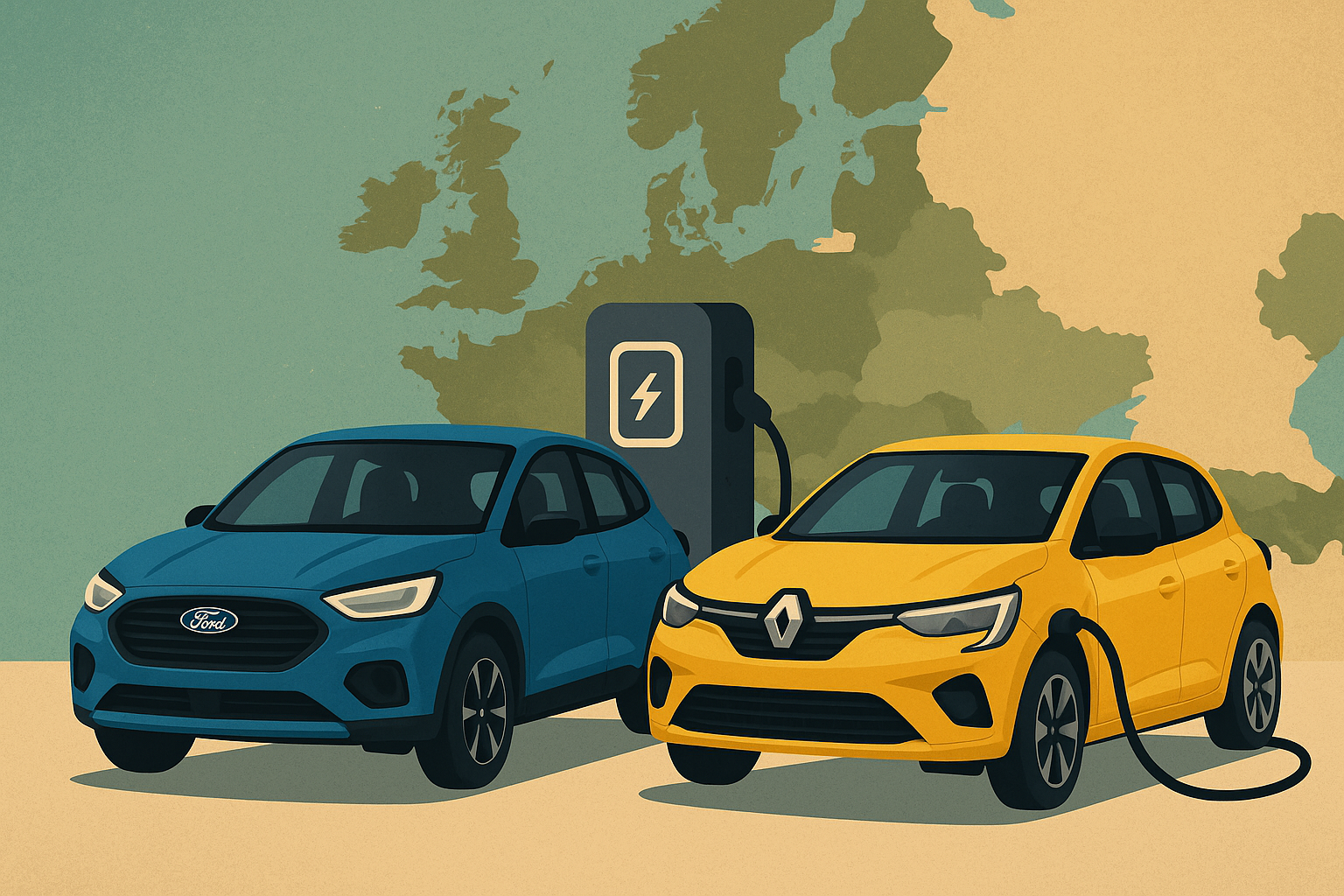
Ford and Renault are setting up a new production strategy in Europe as competition from Chinese electric carmakers intensifies.
Both companies face cost pressures and market shifts that are changing how vehicles are made across the region.
Their plan focuses on shared platforms, cheaper development cycles, and flexible output as the European Union prepares updates on future engine rules later this month.
The partnership comes at a time when many manufacturers are reworking their electric vehicle plans in response to slow charging expansion, high production costs, and strong demand for lower-priced models from both European and Chinese brands.
New push for affordable EVs
Renault will develop and produce two Ford-branded models in northern France, with the first expected to reach showrooms in early 2028.
Both firms also intend to explore joint van manufacturing.
The cooperation gives Ford access to Renault’s lower-cost EV development processes, including work done in Shanghai for the electric Twingo, which is due next summer and expected to be priced below €20,000, or $23,299.
Europe shifts strategy amid Chinese expansion
Car manufacturers in Europe are under pressure as Chinese brands such as BYD expand with low-cost electric and hybrid vehicles.
European companies are also adopting Chinese engineering know-how to reduce costs and shorten production timelines.
This shift is reshaping the competitive landscape across the region and affecting long-term investment decisions for legacy brands.
Ford trims its European footprint
Ford’s market share in Europe has shrunk from more than 7% a decade ago to just over 3%.
The company has been cutting output and jobs, signalling a smaller operational presence.
At its Cologne plant, where it produces electric vehicles on a Volkswagen platform, Ford will move to a single production line in 2026 after announcing workforce reductions in September.
Production has already ended in Saarlouis, showing a broader shift toward partnerships rather than maintaining a full standalone manufacturing base.
Industry reacts to policy uncertainty
European carmakers are adjusting their electric plans after early strategies stumbled due to limited charging infrastructure and higher-than-expected costs.
Policymakers in Brussels may revise the planned 2035 phase-out of combustion engine car sales, following industry claims that consumers are switching to EVs more slowly than predicted.
At the same time, the region is seeing a rise in state-supported EV imports from China.
Other brands are also redirecting their efforts toward affordable models.
Stellantis increased output of Citroëns in November due to strong demand for the C3 city car, while Volkswagen is preparing budget options such as the ID. Polo, is expected to be priced below €25,000 next year.
Ford and Renault are also planning shared van production as part of this broader focus on cost efficiency.
The post Ford Renault joins hands for EV production in Europe appeared first on Invezz
